

Software development has changed radically in the last two years. The emergence of generative Artificial Intelligence is not just another new tool in our arsenal: it has completely redefined the rules of the game. What used to take days is now resolved in hours. What seemed complex has become accessible. But this democratization of technical capability brings with it a new reality: expectations have multiplied and the pressure to deliver more, better, and faster is overwhelming.
At JULDITEC we have experienced this transformation from within, working with teams struggling to adapt to this new pace without losing their sanity in the process. And we have identified three fundamental pillars that separate teams that thrive from those that burn out: automate, parallelize, and document. These principles are not new, but in the AI era they have become survival requirements.
The New Context: More Productivity, More Pressure
Tools like GitHub Copilot, ChatGPT, Claude, or Cursor have multiplied the individual capacity of each developer. A junior engineer can now generate code that previously required senior experience. Prototypes that took weeks are built in days. AI suggests solutions, detects bugs, writes tests, and even generates documentation.
It sounds idyllic, but the reality is more complex. When everyone has access to these tools, the bar rises for everyone. Clients expect faster deliveries. Product managers assume everything is easier. Deadlines compress. And developers find ourselves in a constant race where the feeling of "not doing enough" has become the default state.

Pillar 1: Automate Everything That Can Be Automated
Automation is no longer a luxury, it's a strategic necessity. Every minute you spend on repetitive tasks is a minute your competition is investing in innovation. And in the AI era, automating has become more accessible than ever.
Automation in Development and Deployment
At JULDITEC we implement complete CI/CD pipelines that eliminate manual work with each commit:
- •Continuous integration: Automated tests, static code analysis, vulnerability verification
- •Continuous deployment: From development to production without manual intervention
- •Code generation: Scaffolding, boilerplate, database migrations
- •Automated testing: Unit tests, integration tests, e2e tests running on every push
But automation goes beyond code. We automate environment creation with Docker and Kubernetes, infrastructure management with Terraform, and even project report generation. Everything that is done more than once should be automated.
The Real Impact on Competitiveness
A team that automates correctly can deliver in one week what takes others a month. Not because they work more hours, but because they eliminate friction, reduce human errors, and free up mental capacity to solve truly complex problems.
Pillar 2: Parallelize Without Losing Focus
The reality of modern development is brutal: it's no longer enough to do one task at a time. A typical developer simultaneously handles:
- •Development of new features
- •Critical bug fixes
- •Code reviews of colleagues
- •Experimentation with AI tools
- •Dependency updates
- •Technical documentation
- •Planning and synchronization meetings
This context of constant context switching is exhausting. Each interruption has a real cognitive cost. However, effective parallelization is not optional in competitive teams.
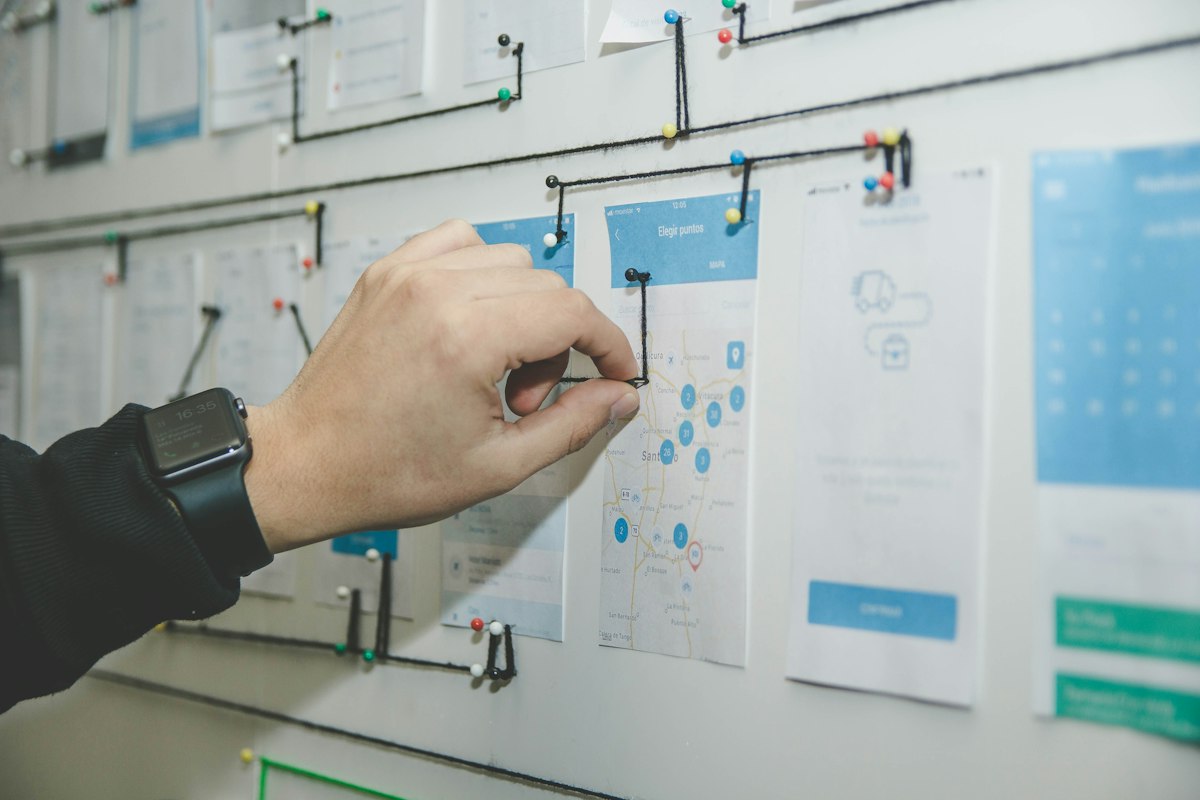
Strategies to Parallelize Without Collapsing
In our projects we apply specific techniques:
- •Time blocking: Dedicated blocks for deep work without interruptions
- •Context management: Tools like Linear or Gitlab to quickly switch between tasks without losing information
- •Branch strategies: Git flow that allows working on multiple features without conflicts
- •Strategic pair programming: For complex tasks that require shared focus
The key is to parallelize processes, not thoughts. While a CI/CD pipeline runs in the background, you can review code. While waiting for feedback on a PR, you can advance on documentation. But you should never be writing code for two different features at the same time.
Pillar 3: Document as if Your Future Self Depended on It
Documentation is the great forgotten in the AI era. With the pressure to deliver quickly, documenting seems like a dispensable luxury. It's the most expensive mistake you can make.
The Risk of Speed Without Memory
When you develop at full speed with AI help, you generate complex code in record time. Three months later, not even you remember why you made certain architectural decisions. Critical knowledge is lost. New team members take weeks to understand systems they could comprehend in days with good documentation.
Strategic Documentation in the AI Era
The good news: AI can also help you document. At JULDITEC we combine:
- •Living README.md: Updated with each significant change
- •ADRs (Architecture Decision Records): Record of important technical decisions
- •Automated diagrams: Generated from code with tools like PlantUML
- •Inline documentation: Meaningful comments in complex code
- •Knowledge base: Gitlab or Notion with patterns, troubleshooting, and best practices
We use AI to generate documentation drafts, but always with human review. Documentation is the team's collective memory, and in enterprise projects like those we develop with Liferay DXP, it can make the difference between a successful project and an unmaintainable one.
The Dark Side: Anxiety and Burnout in Software Engineers
Let's be clear: the acceleration of development has a real human cost. We have seen brilliant engineers leave the sector, not due to lack of technical capacity, but due to emotional exhaustion.
The constant feeling of falling behind is paralyzing. Every day new AI tools appear, new frameworks, new best practices. The pressure to stay current while delivering projects, while learning, while maintaining legacy code, is unsustainable.
Symptoms You Shouldn't Ignore
- •Working more hours but feeling like you're advancing less
- •Anxiety when opening the task manager
- •Guilt for not constantly learning
- •Mental exhaustion even after vacations
- •Loss of motivation for projects that used to excite you
This is the elephant in the room that no one talks about at technical conferences. But it's real, it's affecting entire teams, and ignoring it doesn't make it disappear.
How to Address This Reality from Teams
At JULDITEC we have learned that sustainability is not the enemy of productivity. In fact, teams that take care of their mental health deliver better software.
Healthy Team Culture
- •Realistic prioritization: Not everything is urgent. Learning to say no is a critical skill.
- •Responsible use of AI: Tools are there to help, not to work 24/7.
- •Honest retrospectives: Safe spaces to talk about pressure and overwhelm.
- •Time to learn: Dedicating work hours to training without guilt.
Processes That Reduce Pressure
We implement concrete practices:
- •Realistic sprints with buffer for unforeseen events
- •Rotation in support tasks to avoid burnout
- •Documentation that reduces dependency on key people
- •Automation that eliminates emergency night work

The JULDITEC Approach: Sustainable Productivity
As a technology consultancy specialized in enterprise architectures and Liferay DXP, we work on complex projects with demanding deadlines. We know that speed without direction is just chaos.
Our approach combines:
- •Strategic automation: We invest time in automating processes we know will be repeated.
- •Intelligent parallelization: Multiple workstreams, but with clear ownership and effective communication.
- •Documentation as investment: It's not overhead, it's the team's intellectual capital.
But above all, we put people at the center. Technology evolves, frameworks change, but a burned-out team doesn't recover easily. We prefer to deliver a little later with a healthy team than to meet a deadline with a destroyed team.
Conclusion: Adapting Well Is as Important as Adapting Fast
AI has changed software development forever. There's no going back. Adapting is not optional, but how you do it makes all the difference.
Automating, parallelizing, and documenting are the three pillars that allow modern teams to remain competitive without sacrificing their mental health. They are not productivity tricks: they are fundamentals of survival in a sector that accelerates every day.
At JULDITEC we believe that the best code is written with mental clarity, in teams that work well, with processes that sustain rather than drown. AI is a powerful tool, but the true competitive advantage remains human: teams that know how to work together, that document their knowledge, that automate intelligently, and that care for their long-term sustainability.
Because in the end, this is not a sprint. It's a marathon. And in marathons, the winner is the one who knows how to maintain the pace without collapsing.